

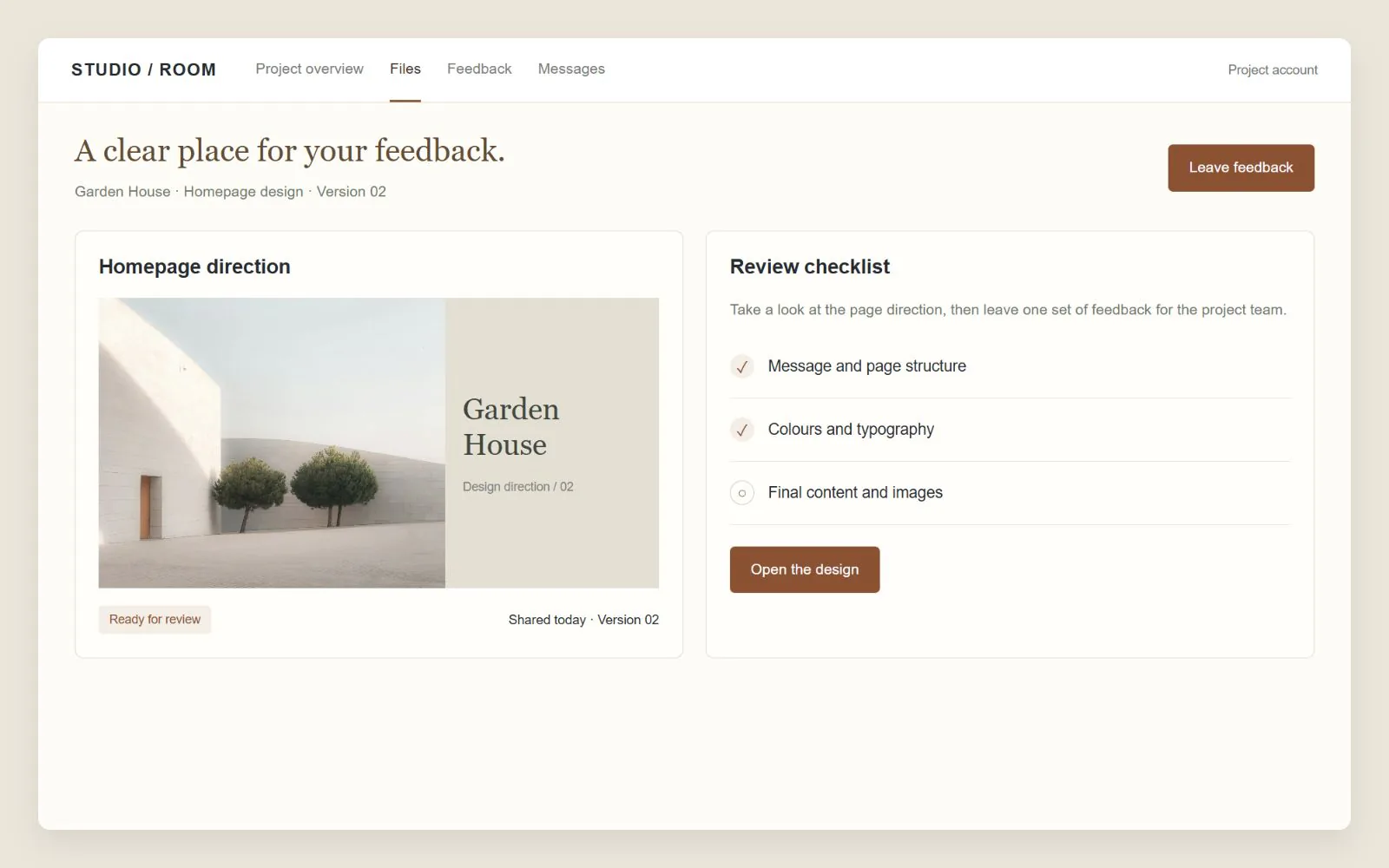
Account journeys
Sign-in, recovery and the actions each customer or staff role needs.
Sign-in and account access around the client relationship.
A customer portal gives people a useful view of their own account, documents or project. We design the experience around what they should be able to find and do.
Designed for businesses across the UK. Scope, ownership and next steps agreed before the build. Interface concepts shown with sample data.
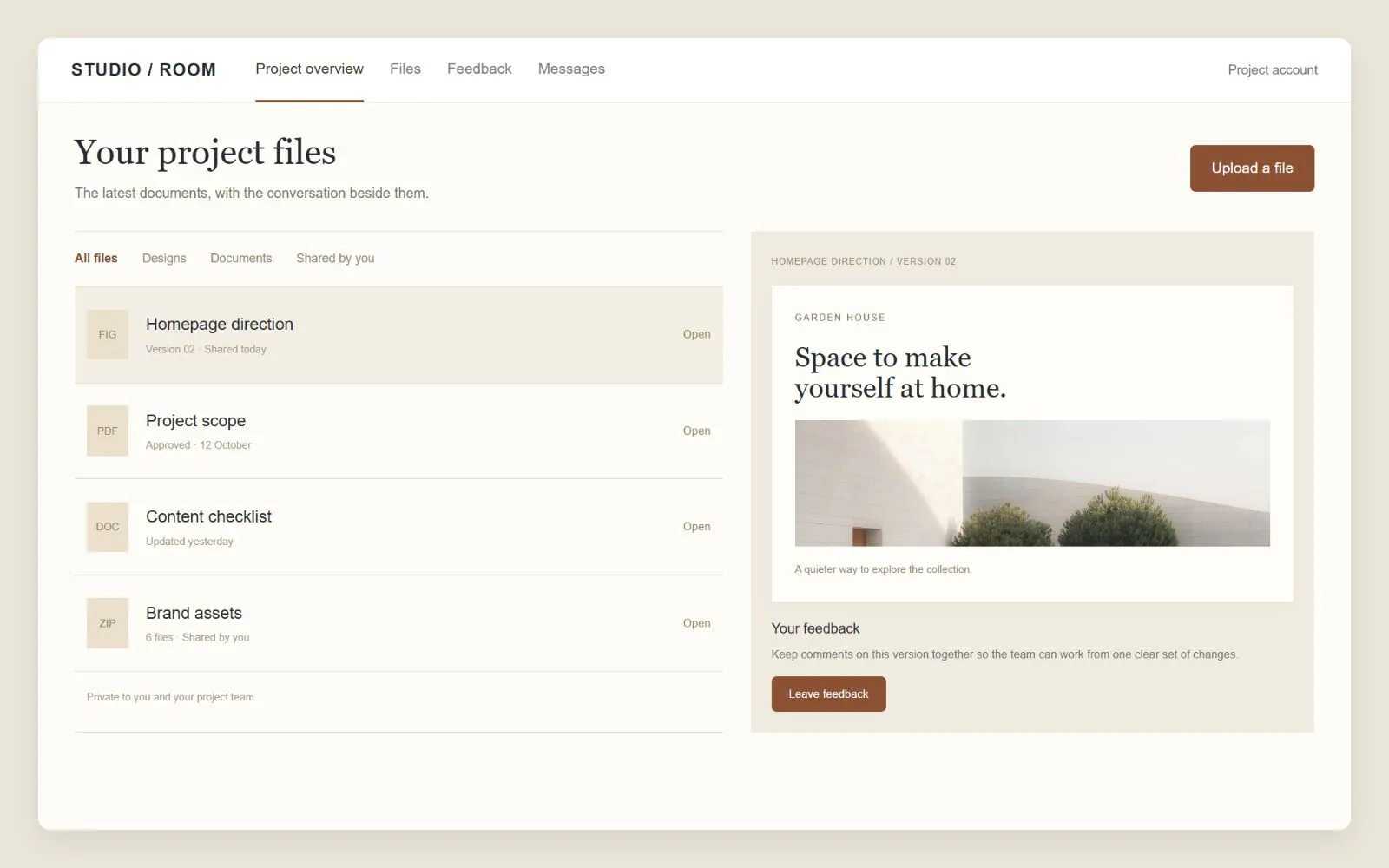
Start with the repeated question: where is my document, what happens next, or how do I send a request? A focused portal can bring those answers together. We map customer and staff journeys separately, with access rules that reflect the actual business relationship and the information involved.
A better place for the next update.
Sign-in, recovery and the actions each customer or staff role needs.
Sign-in and account access around the client relationship.
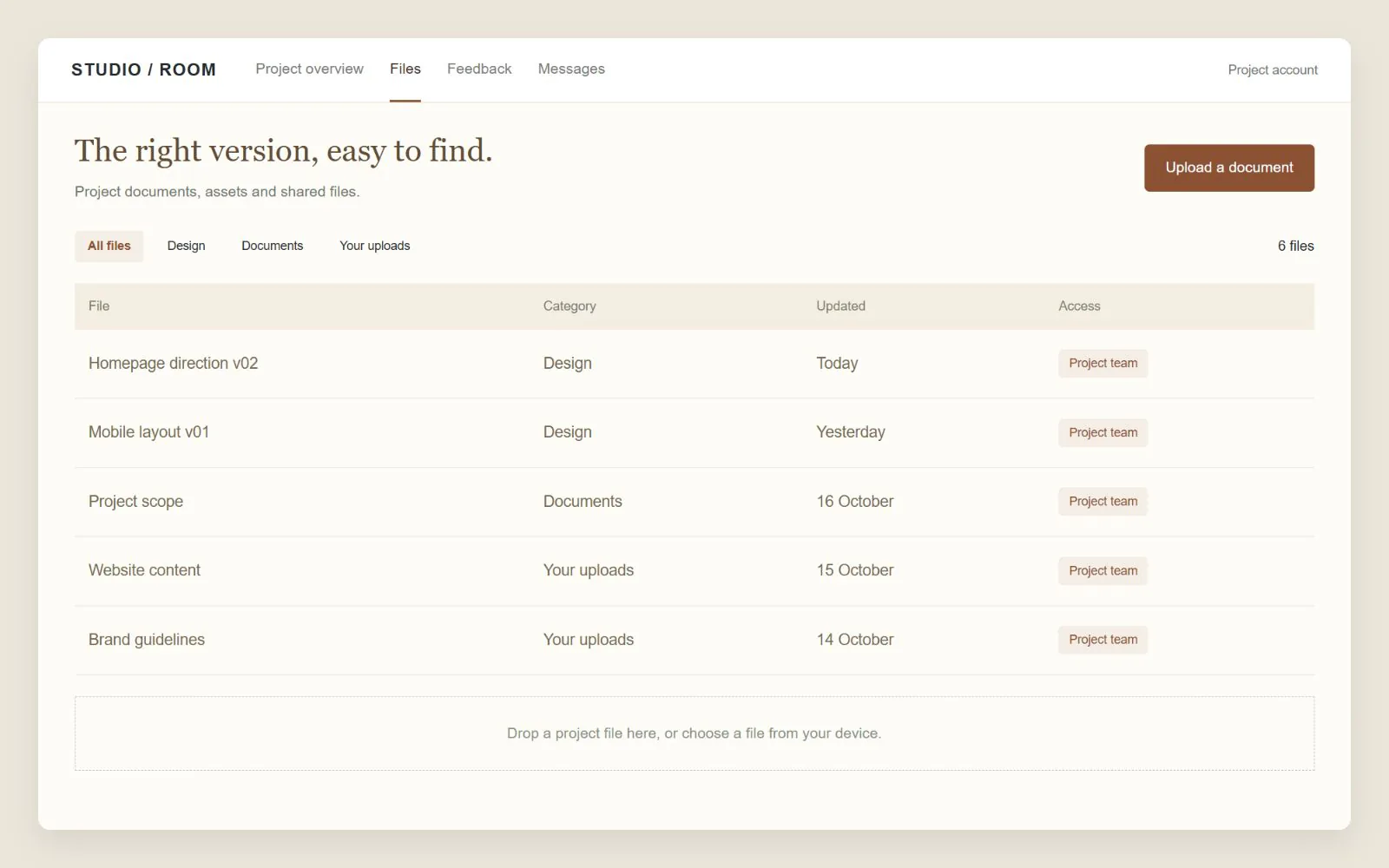
Agreed documents, progress information, requests or approval workflows.
Documents and updates people can find without searching emails.
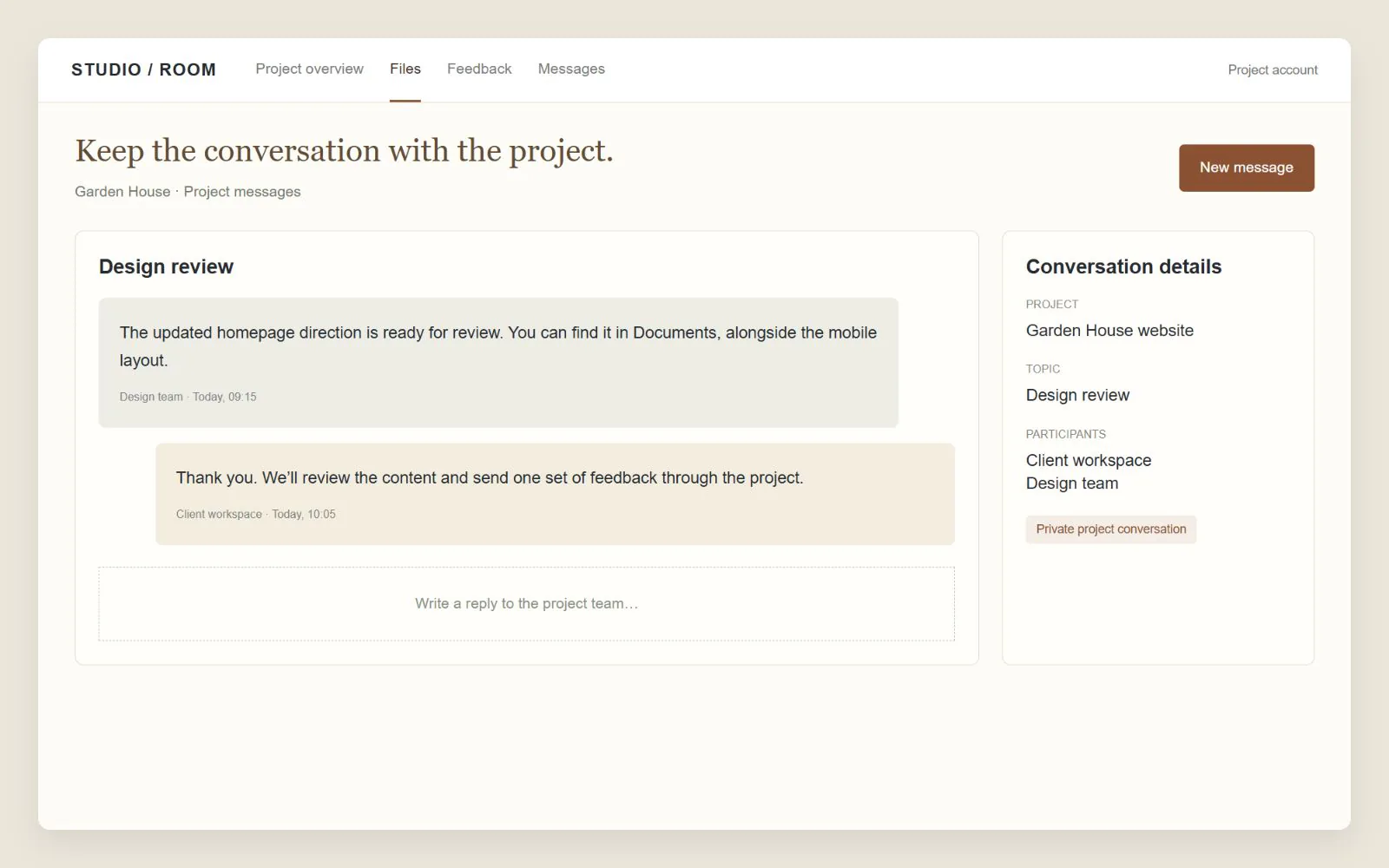
Data access, upload requirements, notifications and integration responsibilities defined before building.
Permissions and account recovery considered alongside the design.
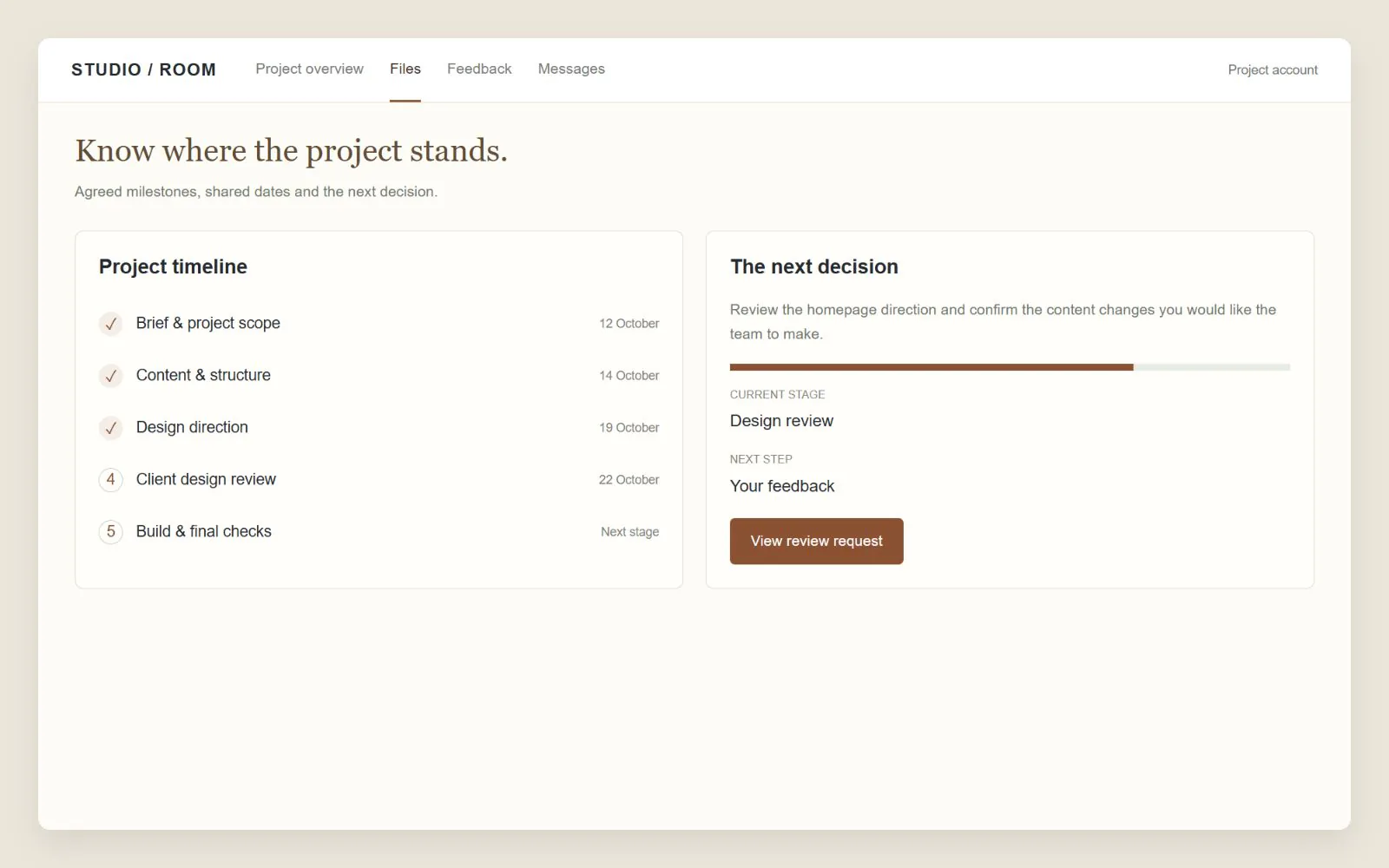
A client portal is a private area for existing customers, rather than a second public website. We start with the information people repeatedly ask for: documents, project updates, account details or a way to make a request. The portal should reduce the effort of finding that information, not introduce another confusing place to check.
The content and actions depend on the relationship. A project-based business may need milestones and review documents; another may need service requests or account information. We plan those journeys with the people who will manage the updates as well as the customers using the portal.
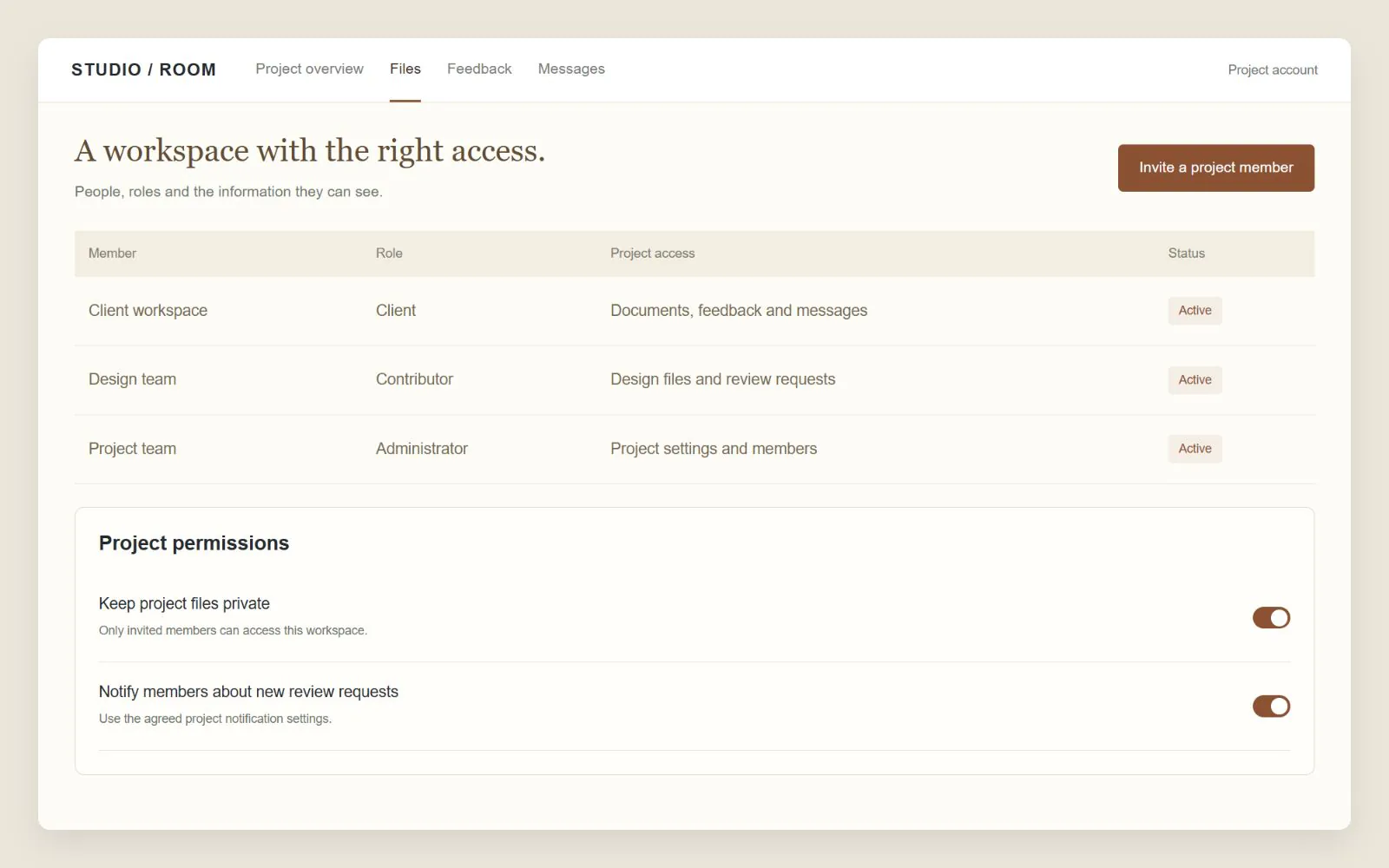
Before development, we define which account owns each record, how people sign in, who can invite another user and what happens when access needs to be removed. Staff access and customer access have different responsibilities. File permissions and account recovery need to work alongside the visible page design.
Connections to a CRM, booking system or document store depend on the available APIs and agreed data model. We scope the essential integrations and identify authentication, storage, hosting and ongoing maintenance costs. A customer portal is not automatically a paid membership website; joining, billing and content access may need a different product structure.
A client portal serves an existing customer relationship, such as a project or account. A membership site usually has joining, access tiers and renewal rules. A CRM is the team's internal view. We keep these needs distinct and connect them only where that improves the agreed workflow.
A useful brief makes the quote clearer. Share what you have, what customers need to do and who will manage the website or system after launch.
Portal work is quoted against the account, data and integration requirements. Authentication, file storage, infrastructure and maintenance arrangements are agreed explicitly.
Practical answers before you decide on the next step.
That is a core requirement to define and test in a customer portal. The implementation must enforce the agreed permissions on the server, not simply hide parts of a screen.
We assess the CRM's supported interfaces and the permitted data flows before agreeing the integration.
We can scope document types, storage, size limits and the permissions for uploading and viewing files. Retention, deletion and sensitive-content handling also need to be agreed.
We can plan organisation accounts with separate user access where needed. Invitations, permissions, record ownership and removing former users must be included in the requirements.
Yes. A first release can focus on the most useful account journey, with later features scoped separately. The initial data model and access rules should allow for that direction.
Share the requirement and your current setup. We can then agree the useful first version, the scope and the next step.